

Всеки, който има поне малко опит в тази област ще ви каже, че събитийният мениджмънт може да изглежда измамно лесен отстрани. Докато не опиташ, почти със сигурност няма да вярваш на хората, занимаващи се с това, когато ти казват какъв стрес и колко организация стои дори зад най-безобидното събитие.

Има много строго професионални сфери, за които хората си мислят, че са лесни. Вземете тичането. То е лесно. Всеки може да тича. Е, пробвайте да бягате като Юсеин Болт. Именно. И точно тук е разликата между професионалиста и любителя. И със събитията е така.
Управлението на събития е много голяма тема, просто защото те идват във всякакви форми и размери, за всякакви аудитории. Има нишови събития, на които са поканени 15 души, и масови, на които идват хиляди. От семинар, през сватба, коктейл, маратон и форум до концерт - това са все събирания, които някой трябва да организира така, че гостите/посетителите/участниците да са доволни.
Всяко професионално организирано събитие има няколко основни етапа:
На етапа на планирането трябва да си отговорите на основни въпроси като "Защо го правим?", "Към какви хора е насочено?", "Кога и къде е подходящо да го организираме?". Правят се т.нар. SWOT (strength, weaknesses, opportunities, threats) анализи, проверява се за конкурентни събития в същия период и др.
Неслучайно събитията трябва да се планират много преди момента на провеждането им. Да, не може за утре, съжалявам. И за други ден не може. (Тук изключвам извънредни обстоятелства, при които може и за днес, но те не са представителни за реалната работа.)
При нормален ритъм рутинно събитие, което вече е в календара ни, имаме опит при организиране на подобно, малко е по мащаб и има семпъл сценарий, отнема между една и две седмици подготовка. И това, при условие, че всички замесени знаят за него предварително и са потвърдили, че нямат други ангажименти в този ден.
За съжаление обаче няма кратко упътване за организиране на мероприятия. Това е така, защото няма значение колко сте организирали досега, всяко е различно (даже когато е еднакво с предишното). Първо, всяко събитие се случва на живо и няма как да е еднакво с каквото и да е преди. Второ, колкото и да сте опитни, е невъзможно да предвидите безкрайното разнообразие от възможни неща, които могат да се объркат. Сервитьорка с изкълчен глезен, спукана гума, залят с течност компютър, водещи, болни от най-модерния за сезона грип, спиране на електричеството и какво ли още не стои между вас и вашето хубаво събитие.
И незабравяйте: Правилната Предварителна Подготовка Предотвратява Провала!
Прочетете моите 10 основни препоръки, които могат да помогнат за намаляване на риска от грешки в организацията, в пилотния брой на списание "Elysium". Това в никакъв случай не е изчерпателен списък (само в 10 точки е), но е основа, която можете да използвате.
Има много строго професионални сфери, за които хората си мислят, че са лесни. Вземете тичането. То е лесно. Всеки може да тича. Е, пробвайте да бягате като Юсеин Болт. Именно. И точно тук е разликата между професионалиста и любителя. И със събитията е така.
Управлението на събития е много голяма тема, просто защото те идват във всякакви форми и размери, за всякакви аудитории. Има нишови събития, на които са поканени 15 души, и масови, на които идват хиляди. От семинар, през сватба, коктейл, маратон и форум до концерт - това са все събирания, които някой трябва да организира така, че гостите/посетителите/участниците да са доволни.
Всяко професионално организирано събитие има няколко основни етапа:
- изследване (проучване)
- измисляне (концепция)
- планиране
- координация и реализация
- оценяване
Всеки един от тези етапи съдържа много елементи.
На етапа на планирането трябва да си отговорите на основни въпроси като "Защо го правим?", "Към какви хора е насочено?", "Кога и къде е подходящо да го организираме?". Правят се т.нар. SWOT (strength, weaknesses, opportunities, threats) анализи, проверява се за конкурентни събития в същия период и др.
Неслучайно събитията трябва да се планират много преди момента на провеждането им. Да, не може за утре, съжалявам. И за други ден не може. (Тук изключвам извънредни обстоятелства, при които може и за днес, но те не са представителни за реалната работа.)
При нормален ритъм рутинно събитие, което вече е в календара ни, имаме опит при организиране на подобно, малко е по мащаб и има семпъл сценарий, отнема между една и две седмици подготовка. И това, при условие, че всички замесени знаят за него предварително и са потвърдили, че нямат други ангажименти в този ден.
За съжаление обаче няма кратко упътване за организиране на мероприятия. Това е така, защото няма значение колко сте организирали досега, всяко е различно (даже когато е еднакво с предишното). Първо, всяко събитие се случва на живо и няма как да е еднакво с каквото и да е преди. Второ, колкото и да сте опитни, е невъзможно да предвидите безкрайното разнообразие от възможни неща, които могат да се объркат. Сервитьорка с изкълчен глезен, спукана гума, залят с течност компютър, водещи, болни от най-модерния за сезона грип, спиране на електричеството и какво ли още не стои между вас и вашето хубаво събитие.
И незабравяйте: Правилната Предварителна Подготовка Предотвратява Провала!
Прочетете моите 10 основни препоръки, които могат да помогнат за намаляване на риска от грешки в организацията, в пилотния брой на списание "Elysium". Това в никакъв случай не е изчерпателен списък (само в 10 точки е), но е основа, която можете да използвате.
Post a Comment
Anyone who has at least some experience in the area of event management will tell you that it can look deceptively easy from the outside. Until you try, you will almost certainly not believe event organisers when they tell you how much stress and planning is involved in even the most harmless event.
There are many professional spheres which appear easy at first glance. Take running. It's easy. Everyone can run. Sure, but try running like Usain Bolt. Not so easy now, is it? And here lies the difference between the professional and the amateur. The same logic applies to events.
Event management is a very big topic simply because events come in all shapes and sizes and are targeted at a wide range of audiences. There are niche events for just 15 people, and massive ones, attended by thousands. From a seminar, wedding, cocktail, marathon and forum to a concert - these are all gatherings which need to be organised in a way that leaves the guests, visitors and participants happy.
Each professionally organised event goes through several main stages:
Each of these stages contains many elements.
At the planning stage, you have to answer the basic questions like "Why are we doing it?", "What kind of people are we targeting?", "When and where is it appropriate to organise it?". We need to perform a SWOT (strength, weaknesses, opportunities, threats) analysis, check for competitive events in the same period, and more.
Events should be planned long before they are held. Yes, I can’t organise your event for tomorrow, sorry. And not for the day after tomorrow either. (Here I exclude extraordinary circumstances that may require us to respond today, but they are not representative of the real job.)
At a normal pace, we have the experience to organise a routine small scale event with a simple scenario, which is already in our calendar, within one to two weeks. This is the case only provided that all parties involved know of it in advance and have confirmed that they have no other commitments on that day.
Unfortunately there is no shortcuts guide to organising events. It does not matter how many events you have organised so far, each new one is different (even when it is the same as before). First, every event happens live and cannot be the same as anything before. Second, no matter how experienced you are, it is impossible to predict the infinite variety of possible things that can go wrong. A waitress with a twisted ankle, a ruptured tyre, a flooded computer, presenters sick with the latest flu this season, a power cut, and everything else left standing between you and your perfect event.
Remember this: Perfect Preparation Prevents Poor Performance!
Look forward to my 10 best tips of how to create an almost perfect event in Elysium's preview issue. I have tried to recommend a few basic things that can help reduce the risk of mistakes. This is by no means an exhaustive list (10 tips can’t cover this), but it is a basis that you can use.
There are many professional spheres which appear easy at first glance. Take running. It's easy. Everyone can run. Sure, but try running like Usain Bolt. Not so easy now, is it? And here lies the difference between the professional and the amateur. The same logic applies to events.
Event management is a very big topic simply because events come in all shapes and sizes and are targeted at a wide range of audiences. There are niche events for just 15 people, and massive ones, attended by thousands. From a seminar, wedding, cocktail, marathon and forum to a concert - these are all gatherings which need to be organised in a way that leaves the guests, visitors and participants happy.
Each professionally organised event goes through several main stages:
- research
- concepting
- planning
- coordination and realisation
- evaluation
Each of these stages contains many elements.
At the planning stage, you have to answer the basic questions like "Why are we doing it?", "What kind of people are we targeting?", "When and where is it appropriate to organise it?". We need to perform a SWOT (strength, weaknesses, opportunities, threats) analysis, check for competitive events in the same period, and more.
Events should be planned long before they are held. Yes, I can’t organise your event for tomorrow, sorry. And not for the day after tomorrow either. (Here I exclude extraordinary circumstances that may require us to respond today, but they are not representative of the real job.)
At a normal pace, we have the experience to organise a routine small scale event with a simple scenario, which is already in our calendar, within one to two weeks. This is the case only provided that all parties involved know of it in advance and have confirmed that they have no other commitments on that day.
Unfortunately there is no shortcuts guide to organising events. It does not matter how many events you have organised so far, each new one is different (even when it is the same as before). First, every event happens live and cannot be the same as anything before. Second, no matter how experienced you are, it is impossible to predict the infinite variety of possible things that can go wrong. A waitress with a twisted ankle, a ruptured tyre, a flooded computer, presenters sick with the latest flu this season, a power cut, and everything else left standing between you and your perfect event.
Remember this: Perfect Preparation Prevents Poor Performance!
Look forward to my 10 best tips of how to create an almost perfect event in Elysium's preview issue. I have tried to recommend a few basic things that can help reduce the risk of mistakes. This is by no means an exhaustive list (10 tips can’t cover this), but it is a basis that you can use.

Author - Aneta Nedyalkova -
A dear friend once called me a ‘Thing Finder’, just like Pippi Longstocking. It looks like I am, and it looks like I like it that way :)
So let me tell what I found the other day. The Castle of the Sleeping Beauty. I knew it was somewhere here, but I must admit I knew nothing about the castle itself. Now I’ve learned it’s secrets.
They call it The Castle of the Sleeping Beauty because its architecture and location - hidden at the foot of a forest hill - has inspired Charles Perrault to write the famous tale, whose original title is actually "La Belle au Bois Dormant" - The Sleeping Forest Beauty. The Château d'Ussé and its chapel, named after Sainte Anna, were built more than 500 years ago. At the entrance of the castle, a sign informs curious visitors that its owner, the grandson of Duc de Blacas, still lives there. The family has owned the castle for over two centuries and is dedicated to continually restoring it, day after day, month after month, year after year. A myriad of specialists are involved in the restorations, and the works are supported by entrance fees and donations. Each and every one of the castle’s nooks and crannies are painstakingly brought to their former glory.. In a short video, screening in one of the stone cellars, we meet a sculptor who has spent the last 15 years restoring the facades and their ornaments and a master roofer who shares that people come and go, yet the castle remains and they have an obligation to care for it ...

The beautiful park is designed by the emblematic French gardener Le Nôtre. Take a stroll down stunning floral alleys à la française and you’ll also encounter the two century old oaks, a gift by Chateaubriand to the then lady of the castle, dating back to 1808. (We’ll leave the story of the parade meal of Chateaubriand for another time :)).


You can also visit the old cellars and stables of the castle, before finally entering the castle itself. And there ... there you go back in time and actually enter the fairy tale. You are climbing to the top of the Tower up a narrow stone staircase. In small rooms, behind glass, moments of the fairy tale are imaginatively recreated. You find yourself in an old attic, supported by wooden beams and full of cobwebs, filled with a treasure of antiques. A papyrus scripture tells you that the attics of castles are those places that hide secrets, mysteries, treasures ... And then, after experiencing the Tower, where the Prince has awakened his Beauty, you walk down the castle's halls.


Author - Magdalena Tyra -
Some time ago I visited Santiago de Compostela in Galicia in Northern Spain. My inspiration came from the Scottish connection. I absolutely love everything about Celtic heritage and the idea of seeing Spanish Celts in Kilts playing Scottish music on pipes intrigued me. On that visit, I saw many pilgrims in Santiago, which is the destination of many Camino walks, but I would have never have imagined I would be one of them 5 years later, walking 780km across Northern Spain. The seed was planted in my mind on that visit and just grew stronger.
The next milestone was watching the movie “The Way“ with Martin Sheen, a film about an American doctor who comes to St. Jean Pied de Port, France to collect the remains of his son, killed in the Pyrenees in a storm while walking the Camino de Santiago, also known as The Way of Saint James.
It was such a strong impulse. I read a few Camino forums, and jogged for a month to improve my stamina in the local park. Soon, I was ready for the new adventure. I packed my rucksack very lightly with the bare minimum (absolutely crucial as you need to carry it all the way). Even carrying a camera sounded too heavy, and I could use the camera on my phone instead. I decided to divide my Camino into 4 parts and do it in stages, year by year. I simply didn’t have 30 days of holiday to do it in one go. I have to admit I was scared of failure as I had never walked such long distances (average 20 km per day) with a rucksack. However, I knew there was something bigger than myself and I was just a part of the big master plan, it was my destiny and I would be fine.

The Way of St James was one of the most important Christian pilgrimages during the middle ages.
The legend holds that St James’ remains were carried by boat from Jerusalem to northern Spain, where he was buried in the city of Santiago de Compostela. In the 1980s the Camino underwent a revival of its popularity, attracting increasing the numbers of modern pilgrims. In 1987, the route was declared the first European Cultural Route by the Council of Europe; it was also named one of UNESCO's World Heritage Sites.
I wasn’t sure what I was looking for but I just knew I would find my answers there. It all sounded very exciting; a less is more philosophy, travelling light, taking the bare minimum, basic accommodation, no distractions, walking in beautiful nature - so different from living in busy London trapped in commuting, constant crowds, overwhelming news, shopping, eating, being spoiled for choice. I needed to go away on my spiritual retreat and remove myself from the bustle of modern life.
No expectations, no controlling of the outcome in my head, just an open mind and heart. I decided to treat each person who I was going to meet as a gift from God; embracing, trusting and inviting each day as it comes, going closer to the destination.
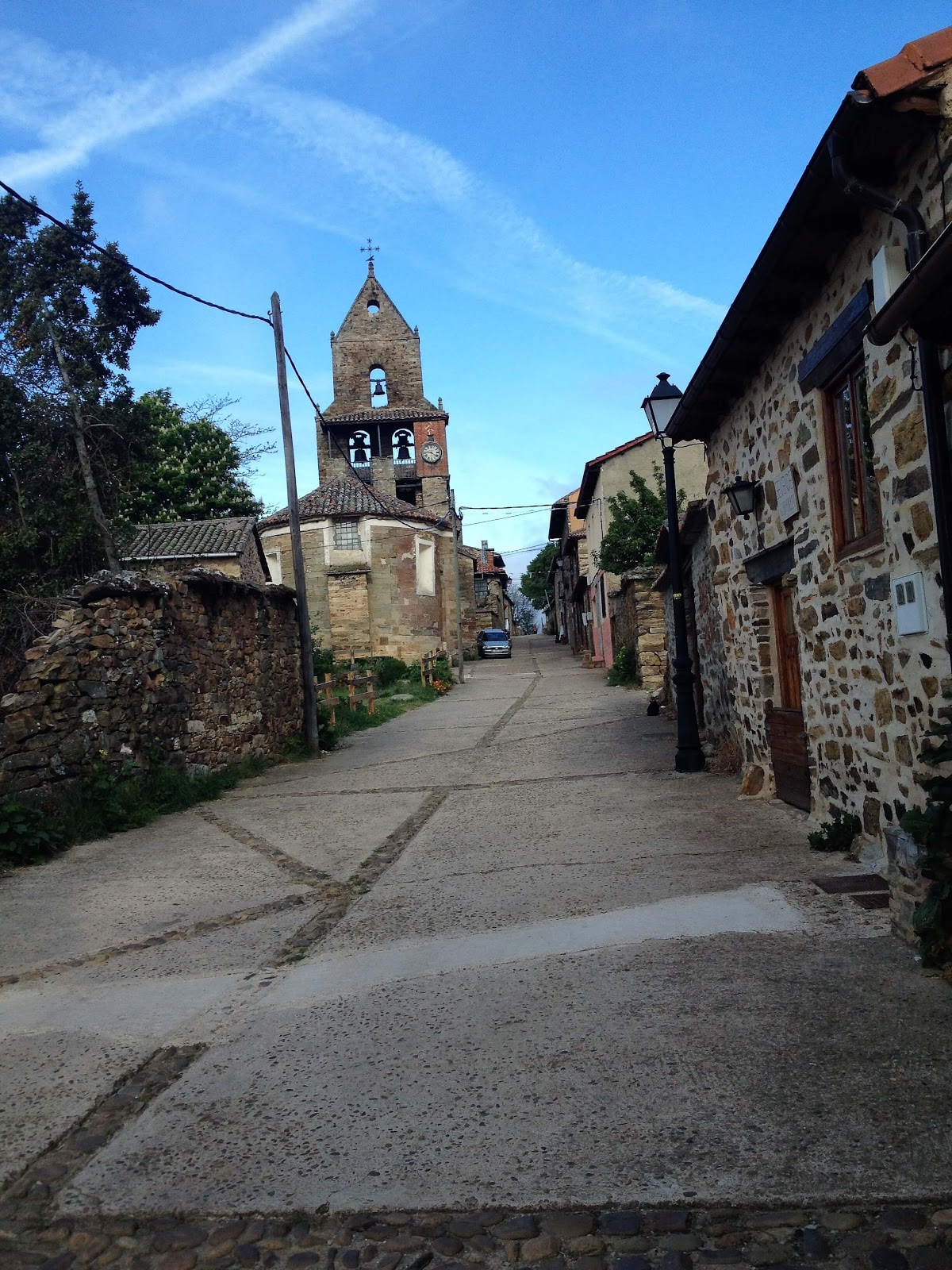
And so I found myself in Rascavalles in the Basque Country (second stop after St Jean Pied de Port). The idea of walking through the Pyrenees on the first day didn’t sound right for my level of fitness. Feeling fresh, walking in crisp air through picturesque fields, hills and forests. The Camino Way is well - signed, you can find the symbol of the Camino - a scallop shell – everywhere to keep you on the track, as well as yellow arrows which help with navigation.
The Basque Country keeps its unique cultural tradition and identity in distinct language and music: Navarra, then La Rioja where the scenery of vineyards reminds you constantly that you are in the Rioja region famous for its excellent wine. At the summit of the hills, along with Pilgrim monuments, unfolds the scenery of endless sunflower fields and wind turbines. Then follows the flatness of the Palencia region which you just want to walk through as soon as possible, as, scenery-wise, this is the least interesting part of the Camino. The breakthrough happens again in Leon as you entering the Cacabelos in El Bierco province surrounded by mountains by all sides which makes this area isolated from neighbouring lands. Then you pass the town of Ponferrada, donated to the Templar for protecting the pilgrims on the Way of St James with a Templar Castle built in the 12th century. Finally, Galicia - the most scenic and picturesque part of Camino full of historical towns and the Atlantic coast. I have mentioned just a few places in this historical land of Northern Spain, which is bursting with heritage.
The Camino for me was also a culinary adventure. I ate the best Pinchos, (commonly known as the tapas of Northern Spain) in Pamplona, the best Rioja I drank in Navarra. Galicia is famous for its seafood and Pulpo – octopus in Melide, (Case del Elzemieke).

What I never forget was the special connections and friendships which I made on this trip. Endless discussions about life, happiness, love, dreams, faith, religion. You are never alone on the Camino unless you want to be. Sometimes I needed silence and solitude, but most of the time I was in the company of others. It happened so naturally. You meet people in hostels, in the evening sharing dinner and a glass of wine and of course walking on the Way.

Life was simple on the Camino. Waking up very early in the morning, walking for about 6 hours, resting, eating and being so grateful for comfort of bed in the evening. Sometimes sleeping with 20 people in the room. Snoring stopped bothering me after the 2nd day, it is a part of the experience (however ear stoppers can help). The hardest part for me was to say goodbye to my friends and let them go at the end of each part of my Camino. Many of them walked further to Santiago but I chose my Way. I had stopped and started again from the point I finished the last time.
My epic journey took me 4 years to complete. Entering Santiago de Compostela was very emotional for me. All my friends who I carried in my heart from previous years walked with me in this moment. I tried to imagine how it was for them walking to Santiago town.
Did they find what they were looking for, did they have their answers, and did they think about me?
I made some close friends with I am still in touch, and some acquaintances who I only encountered once, like a couple from New Zealand who I met at dinner in Zubiri. They were walking the Camino in reverse from Santiago as they had already done the Camino on bicycles.
The Camino walk is like life; sometimes with sunshine, sometimes with rainy days. It is not about the destination, it’s about the journey.
“We shall not cease from exploration
and the end of all our exploring will be to arrive where we started
and know the place for the first time”
Quote from Four Quartets by T.S. Eliot


Author - Aneta Nedyalkova -
A dream come true! Regardless of how many wonderful books I read, there is one book that will always fascinate me. A book I can read over and over again. A book in which there is everything...
Dignity, honour, a ‘till death do us part’ kind of friendship, battles, murders, vengeance, extreme courage and delicate femininity, humour, love, betrayal, noble men and women and wicked men and women, great minds, wealth, poverty, dreams, faith ... Everything.
The Three Musketeers - my dad gave it to me first and just like me he still rereads it! It’s a book that has marked me since I was 10 years old and hiding under the blankets, reading it with a flashlight, because I simply could not let go of the story.
And now, here in France, I have found him ... d'Artagnan! ...

Le Château de Castelmore, Gascogne is the home of Comte Charles de Batz de Castelmore d'Artagnan - not a very wealthy Earl, but a glamorous musketeer, and the historical personality who inspired Alexandre Dumas to create his glorious hero d'Artagnan!
The castle is right next to Lupiac - a small town where everything is connected with d'Artagnan - the square, the restaurant, the summer festival (when all are dressed with clothing from times gone by), the museum, the monument in the centre - everything is dedicated to the brave royal musketeer.
It was like a brief return to that romantic age, that has left me breathless ...
One of my most powerful experiences in France.


Today we present you with this delightfully delicious interview with our lovely friend and beauty blogger Yael Beck Nada.
Yael is: Married and a mother of two . Beauty obsessed . Norwegian born . Lives in Israel…

Please, tell us a bit more about yourself, Yael.
I was born and grew up in Norway, but moved to Israel by myself at age eighteen, straight after finishing high school. I have lived here in Israel more or less ever since, with the exception of studying for my master degree in Norway and working in Miami, Florida for a while.
What role does beauty play in your life?
I suppose I was a bit of a tomboy as a young girl and didn’t really take much interest in how I looked. Today, however, I am quite beauty obsessed. I thoroughly enjoy my beauty rituals, simple as they may be. They allow me to rewind and, as a mother of two small toddlers, these are often the only times in the day that I manage to relax completely and and tune into my own needs. It frames my day, in a sense, as it is one of the first things that I do when I wake up and one of the last things that I do before I go to bed (when things go according to plan, that is!).
I love testing new products both within skincare and cosmetics and tend to switch things up quite a bit. However, with limited time for self care it is always good to have an idea of what works well for one’s skin and to what products can always be trusted to deliver. A major plus in my book is if they are also easy to get hold of.
Do you have any childhood beauty memories that stand out?
I remember vividly watching my mother in the bathroom as she was leaning towards the mirror, applying her typical ‘80s light blue, frosted eyeshadow. Those were times when all I cared about in this world was playing football outside with my brothers and our friends. I don’t think I had much of a concept of how I looked those days at all. I remember wrinkling my nose as I asked her why she was putting that stuff on her face. She said she did it because she liked it. When I still wasn’t convinced about the soundness of that, she said that some day I would understand. Words of truth, these days I think I must drive her nuts at times, with all my beauty talk!
I also remember how my journalist father would bring my mother and me Ahava moisturizers back whenever he went to Israel to report back home about the situation in the Middle East. I thought those creams were sooo good. However, I got the ultimate proof of having entered womanhood (at least in my own eyes) when he at some point bought me what I think must have been quite an expensive “adult” Oriflame cream and [drum whirl…] my first lipstick! I was in heaven. In retrospect, that dark, brownish red lipstick must have been way too intense on my young innocent self, but that didn’t matter as it made me feel like a real lady while I was wearing it up in my room. I remember daydreaming that the guy I was into would see my like that in real life and 💖 (how could he possibly help himself?) 💖 fall head over heels in love with me...

What are your skincare routines these days?
In the morning, I usually just splash some cold water in my face and apply a few squirts of a calming and moisturizing SebaCalm serum for sensitive skin. It seems to soothe my skin (I tell myself that it reduces the appearance of zits as well, because why not?) and I like the feel of it. After that, I put on whatever moisturizer I have at hand (usually the same night cream that I applied the evening before), a rosehip seed oil if I have one at hand and then I finish up with a solid SPF. As a born and bred Scandinavian living in sunny Israel, sun protection is key. Once a week or so I try to use an exfoliator and then follow up with some moisturizing face mask.

Do you think having grown up in Norway has affected your approach to beauty and perhaps also your fashion style in some way?
When I grew up in Norway, girls and women would usually take most of their self care into their own hands. I am talking about things such as manicures, hair removal, eyebrows, facials, hair coloring, etc. I am not sure to what degree this is still the case in Norway these days, but in Israel today I think it is quite common for girls and women to have cosmeticians who perform at least some of these services. I still like to take care of stuff on my own, with the occasional exception before special events, such as my wedding. Often, Israelis seem surprised when they hear this.

I also think Norwegians in general have a very healthy and active lifestyle, with lots of outdoors activities. Hence, I often think of a healthy and strong body and natural, glowy look as a beautiful one and talks of diets, calories and thinness are less appealing to me. I am also into the Scandinavian fashion sense (minimalist, comfortable and effortless, functional, high quality fabrics…), although I also need it to be feminine, and sexy (which I think Israeli women are quite good at). I guess I want the best of both worlds?

Are there any beauty products that you miss from Norway?
Not really. If there’s the occasional Oil of Olay product or something that I’d like then I can always buy it online. What I do wish we had in Israel, and which I enjoyed very much while I was in Miami, was chains such as Sephora, CVS, Ulta and Whole Foods [long sigh!].
What is currently on your beauty wish list?
That list is terribly long and might be enough for a few good years of shopping! But a few things in particular come to mind. Skin care wise, I would like to get my hands on a good vitamin C serum, which might help to brighten some dark spots that I got blessed with during my pregnancies. I would also like to try The Ordinary Hyaluronic Acid; some reputed Kiehl’s products, such as their Midnight Recovery Concentrate and the list just honestly goes on and on. I am still breastfeeding, so I am careful with what I put on my skin these days. When I first got pregnant, I learnt to appreciate focusing on active ingredients (specifically, those not harmful to the fetus) when choosing my skin care products and worry less about brands, packaging, etc. It is the inside that counts for me when it comes to skincare (although I do appreciate tasteful and delicate packaging, but that’s merely a bonus)!

When it comes to makeup, there’s MAC’s Hot Tahiti which I think is the most flattering - as well as the most sheer (and hence effortless) - red lipstick for me and their strobe cream; the epic Dior Addict Lip Glow; the whole range of the Glossier products [I am eagerly awaiting the day when they will start doing international shipping]; I would like to try Chanel’s Illusion D’Ombre and I’d really like to try out Bobbi Brown’s foundation stick (any stick product speaks to me, as I like things to be effortless and quick!).
What do you do with your hair?
I am very low maintenance when it comes to my hair. I basically wash it with whatever shampoo I am using at that moment, maybe twice a week, and then use Batiste dry shampoo according to need. I do not own a conditioner. I am crap with styling (or rather, I do not know how to style hair whatsoever), which is luckily a non-issue now that my hair is short. With all the hair loss that followed the pregnancies, it just felt good to “start over”, with healthy and short hair. Now, I just let it air dry and brush it when it’s almost dry. Beyond this, I tend to get highlights and cut, maybe once or twice a year and that’s it for hair care.

What’s in your makeup bag?
There’s my Clinique Chubby Lash Fattening Mascara (in black), because I am allergic to most mascaras and Clinique works well in that sense. Then there’s Maybelline’s Color Tattoo cream eyeshadow in “Creamy Beige” (not sure if this is the same one as the “Tough as Taupe” one on the website?), which is a great neutral just-smear-it-all-over-my-lids (and, in the case of my hooded eyes, also a bit above!) shade. I also have MAC’s pro-longwear paint pot in “Painterly” which I often use as an eyeshadow base, or just on its own - and it double duties as a concealer whenever I wish to cover something up. I prefer to wear warm brown colors on my eyes, as they usually make my eye color pop the most. I use MAC’s “Coquette” eyeshadow to fill in my brows (that’s what you get for growing up in the ‘90s when the use of pinsette was rivaled only by the toothbrush … - if there’s one beauty advice I’d like to pass on to my daugther, it would be not to touch her eyebrows...) and set them with Maybelline’s “BROWdrama” in the shade Dark Blond. For my lips, I have a lip liner by a German natural cosmetics company called “Alverde” in the shade “Pretty Mauve”, which I use both as a liner and to fill in with after applying some lip balm. One my cheeks these days I wear MAC’s Mineralize Blush in “New Romance”, a Lumi Magique highlighting pen from L’Oreal (I am not into contouring, but love experimenting with highlighting) and a Physicians Formula Nude Wear Touch of Glow Foundation in the light shade, which I am very happy with but hardly wear at all (I think I need a stick foundation if I am to be bothered with wearing foundation on the regular).

What makeup do you wear when you go out?
This question makes me want to both cry and laugh at the same time. Let’s just say that the chances of running into me at some bar anywhere these days are rather slim. If I do go out go to a special event, I tend to wear pretty much the same makeup as usual, perhaps with the addition of some eyeliner (kohl and never liquid, as I don’t like any harsh lines) or perhaps instead a bright shade of lipstick (I tend to gravitate towards plum shades, but also like pinks and reds). I love lipsticks in general, they make such a difference and just thinking of them make me happy! I usually choose my lipstick colors according to the season and/or my outfit.
What’s on your nails?
Right now, I am wearing a really nice petrol blue shade called “Denim Dream” by an Israeli cosmetics company called GA-DE. I also love their “Black Cherry” polish. I do love more classic shades as well, however, and in particular I tend to go back to Essie’s “Mademoiselle” (a light pink hue) and this beautiful red shade called “Aperitif”. I love to experiment with colors on my nails and if I have a special occasion then I choose the color according to my outfit, but in general I choose them according to my mood and I always try to pick colors that compliment my fair complexion.
Body skincare regimen?
I try to put on a mild body lotion (I love baby lotions!) or maybe an almond oil when I get out of the shower.
What about perfume?
I am not wearing any perfume these days because I have very small children and I am still breastfeeding. But in general I like a combination of sweet vanilla and musk scents and sexier/darker/spicy fragrances and now and then I do miss wearing perfume.
Define your style with five words?
Classic. Feminine. Comfortable. Sexy. Colorful.
*Disclaimer: This is not a paid advertisement. These recommendations are coming to you straight from Yael's beauty bag of wonders :)

I was invited to take part in a live BBC Radio programme on Brexit on the day Teresa May triggered Article 50.
Here's my part of the programme, which took place during a large media event on Parliament Square in London.
It is hard, you see... apart from all the obvious political and economic uncertainty Brexit brings, for EU expats in the UK this new reality can feel like someone's just pulled the rug right under your feet. People are, understandably, upset.
We are all here completely legally and have been building our lives in the UK, contributing to the economy, diversity and culture. As humans we only have a limited period of time to make our mark on history and society and to put our life's efforts at risk, on the scale in which the current events have, is unfair to put it mildly.
However my experience of living in different countries has taught me that when you fall, you need to get up, keep your chin up and carry on. Moving to another country can be one of the most exciting and fulfilling experiences in a person's life but it does come with numerous risks and uncertainties. The EU has removed some of these uncertainties but hey, life still comes with no guarantees.
This interview has left a few of my friends, who know how emotional, direct and opinionated I can be at times, a bit surprised about how positive I am about my life here. And when I was first invited to take part in the show, I considered bringing up the topic of what Brexit can potentially mean to artists and the art world, which has not been discussed enough in my opinion. However, this is too complex a topic to cover in the few minutes a programme like this allows for.
So here's the truth - life in the UK has been good for my family and I guess also for most other EU nationals who want to stay here. If that weren't the case, I would have already packed my bags and moved somewhere else. Brexit is a hurdle, which has the potential of having catastrophic proportions, but it is a hurdle I hope we can overcome.
Subscribe to:
Posts (Atom)